The foundation Beneath the Foundation.
Most of us, when challenging a belief system, only challenge the surface. We can challenge doctrines, reject practices, even leave an institution, and still carry the framework that produced the doctrine in the first place—leading you ultimately back to the same belief system, just with a minor adjustment in doctrine. This is something I have noticed repeatedly while having conversations with people from various denominations. There may be differences in dietary practices, differences in how they choose to carry themselves, differences in the day they set apart for worship, and differences in the doctrines they hold firmly. But when I began looking beneath those differences, I started noticing...
At the root, it is often the same tree.
I began questioning Adventism long before I considered rejoining the institution. What I had in common with Adventists—and what I initially felt was enough to warrant my interest—was their adherence to biblical dietary practices and their observance of the seventh day as a Sabbath.
But, honestly, that was about it.
Once I began attending the services, however, I started picking up on their language, their theological framework, and the way they understood and explained Scripture. Some of what I was hearing sounded strangely familiar. Not necessarily because I had encountered it in Scripture, but because I had encountered similar ideas in philosophy courses I had taken in earlier years and in books I had read throughout my lifetime.
I understand that ideas can intersect across disciplines, cultures, and centuries but what concerned me more was that some of the things they held firmly to sounded very far removed from what I was actually reading in Scripture. What I initially thought I was questioning about Adventism became something much deeper than an examination of Adventist fundamental beliefs—which, interestingly enough, were already raising questions of their own, but I won't digress... just yet.
The further I went down this rabbit hole, the more intense the awakening became.
And with every answer I found, another question seemed to appear behind it. Eventually, I realized that I wasn't just examining Adventism anymore. I was examining the foundation beneath their foundation.
The Root and the Framework
If I was going to understand what I was actually questioning, I could not begin with the Seventh-day Adventist Church as though it had appeared independently in history—or as though it had simply stepped off the pages of Scripture.
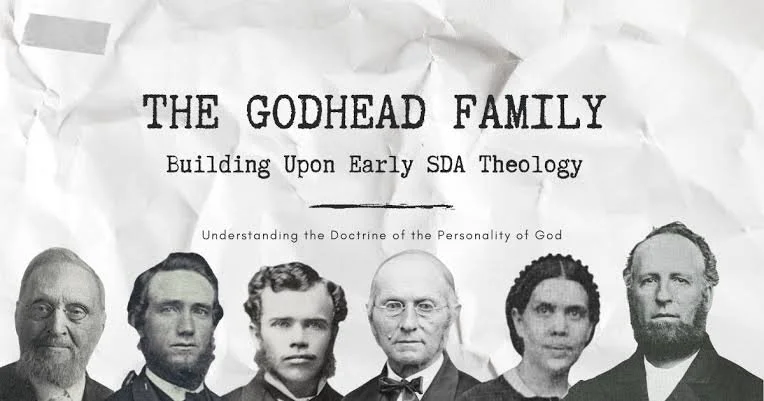
The denomination had a history. It had influences, predecessors, theological assumptions, and movements that existed long before the name Seventh-day Adventist was adopted. In fact, the church itself traces its roots to the Protestant revival movements of the nineteenth century, particularly the Second Great Awakening and the Millerite movement that emerged from it. The name Seventh-day Adventist was adopted in 1860, while the denomination was formally organized in 1863.
Adventism understands itself as more than simply another Protestant denomination. The church describes its identity in explicitly prophetic terms, identifying itself as “God’s remnant people” and as a movement called to share His final message of mercy with the world. Its official mission statement similarly describes the Seventh-day Adventist Church as the “remnant Church of end-time Bible prophecy,” with a particular responsibility to proclaim the approaching return of Jesus Christ.
At its most recognizable level, Adventism shares much of the broader Protestant Christian framework while distinguishing itself through several doctrines that became particularly central to the movement: the seventh-day Sabbath, the literal and imminent Second Coming of Christ, and its distinctive interpretation of biblical prophecy and the heavenly sanctuary. These convictions did not all emerge simultaneously, nor did they originate with the denomination itself. They developed through a series of movements and theological developments that preceded the church's formal organization.
Even the name Seventh-day Adventist reflects two of the movement's defining convictions: “Seventh-day” points to its observance of the seventh-day Sabbath, while “Adventist” points to its emphasis on the Second Advent—the anticipated return of Christ.
So, before I could question Adventism, I had to go further back than Adventism itself.
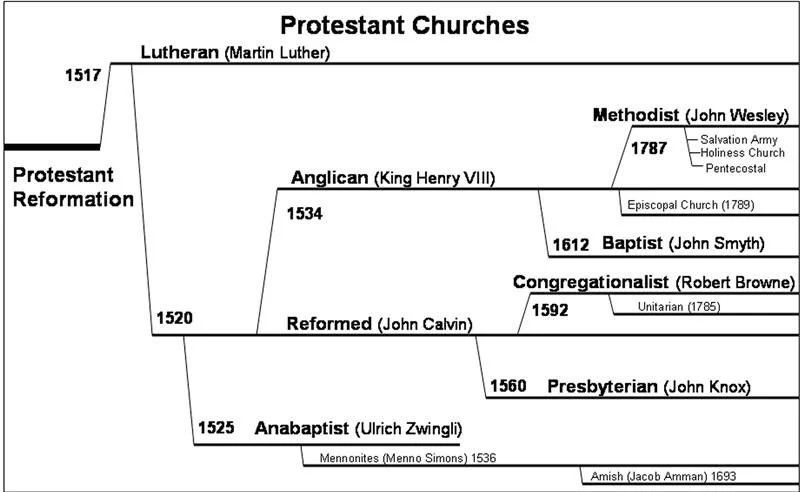
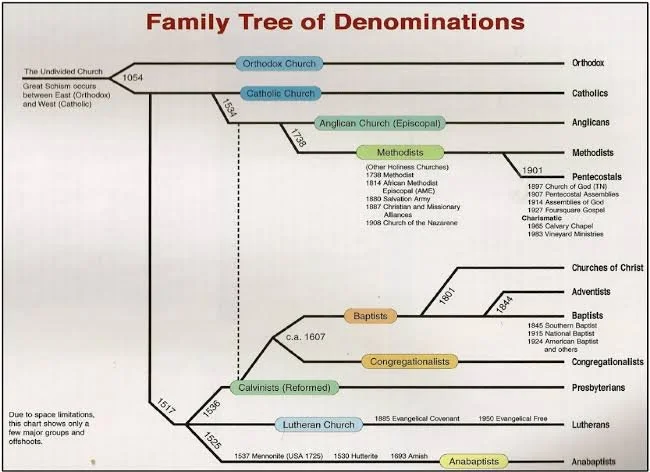
Adventism did not emerge out of a vacuum. Its early believers came largely from existing Protestant traditions. Historical research on the Millerite movement shows that its preachers and followers came from denominations including Methodists, Baptists, Congregationalists, Christians/Restorationists, Presbyterians and others. William Miller himself was a Baptist preacher whose prophetic studies developed within the religious revivalism of nineteenth-century American Protestantism.
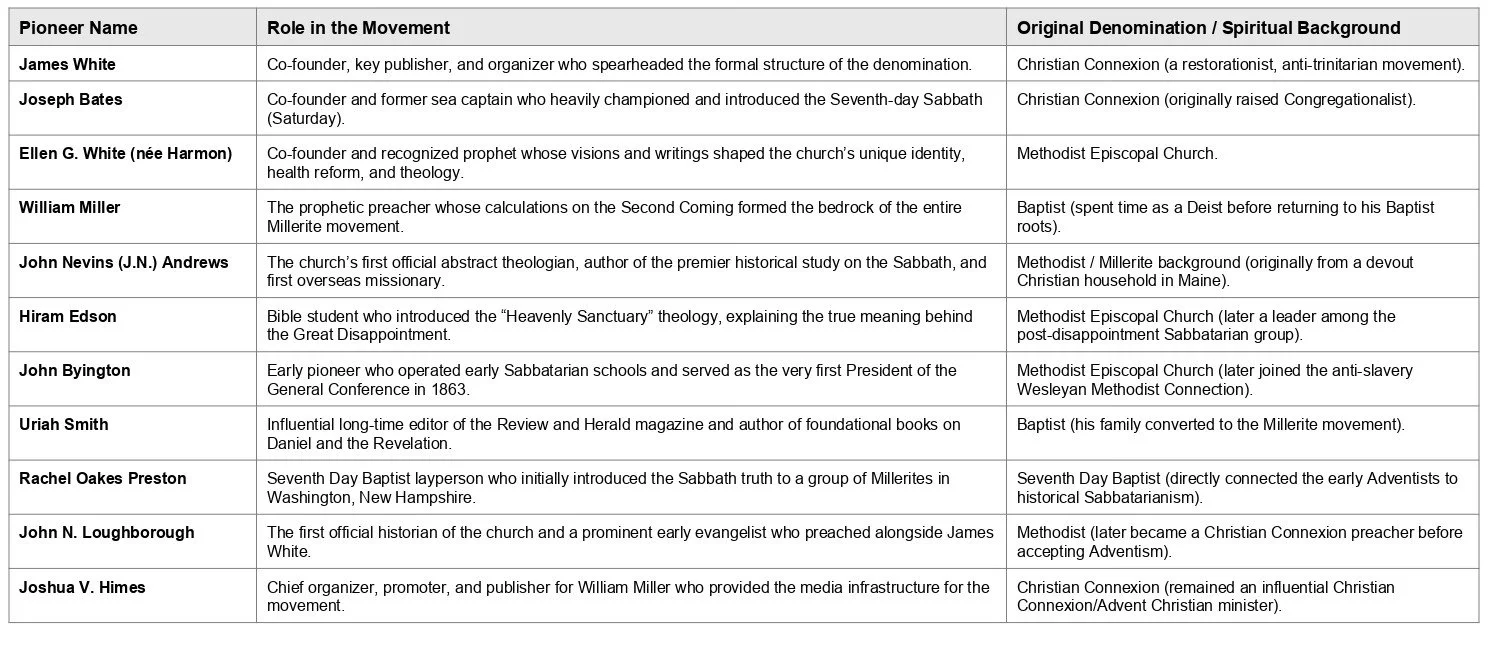
If the branch grew within a Protestant environment, I needed to understand that environment before I could understand the Adventist branch. But even that language required some caution. Scripture had already given me a different picture of what the true vine and the true branch were.
Messiah is the vine. We are the branches.
And if Messiah is the vine, then no denomination can claim to be the vine itself. It can only be examined by what it produces, what it teaches, and whether what has grown from it remains connected to the Word. So before I could understand the Adventist branch, I needed to understand the Protestant branch from which it emerged. And Protestantism itself had grown out of something that had already undergone centuries of development.
The Reformation was already a reform.
That realization was one of the first things that began to change the way I looked at its religious history—outside of the version I had been taught as a child.
The Protestant Reformation was, in many respects, a challenge to the established Roman Catholic order. Reformers questioned church authority, doctrine, indulgences, traditions, and the relationship between Scripture and ecclesiastical authority. They challenged what they believed had become distortions of the faith. But the Reformers were not starting Christianity from scratch. They were reforming a religious system that had already developed over centuries which meant Protestantism itself inherited things—perhaps far more than it had reformed—from the Christian world that came before it.
Some ideas become so deeply embedded in religious thought that, after generations, they no longer appear to be inherited ideas at all. They simply become Christianity.
I began to understand that rejecting Rome does not necessarily mean removing every theological idea that developed within the Christian world before, during, or alongside Rome. A reformation can challenge an institution without necessarily questioning every assumption that institution inherited itself.
And if I wanted to understand what I was actually questioning, I could not stop at the Reformation.
I had to go back to the actual tree.